Exploring the amazing Mongolia: herders in gers in the countryside, hummers sitting in traffic in the capital, Ulaanbaatar, and everything in between.
Saturday, November 26, 2011
Thanksgiving
Our apartment played host to an epic feast of yummy food and good company. We managed to prepare a perfect turkey, a first for everyone involved, along with a heap of great savouries - 'beets' aka beetroot, carrots, vegies, salads and dessert featured an aussie style trifle alongside more traditional american pumpkin pie, and a selection of cakes and sweet things
Here's a peek at the chaos when the food was finally ready:
The spread rivaled any I've experienced before - this thanksgiving idea is a great way to kick off the festive season with some feasting and giving of thanks.
Today has a definite boxing day feel - lots of left overs to nibble on, very relaxed and sport playing on the TV - special wrestling competition to celebrate Mongolian Independance Day!
Thursday, November 10, 2011
Adventures in Ulgii
To make the most of our last week with my leaving housemate 4 of us aussie volunteers set off for an adventure in Mongolia’s far-west. I had been here on a work trip but didn’t get to see the big draw-cards, including climbing to a glacier at Mongolia’s highest peak – Tavan Bogd.
Sally had seen the north, the south and the east. Obviously she needed to see the west before she left. So I organised an exciting itinerary with all the things I had missed and that anyone should see when they come to Ulgii.
As it turned out we didn’t see many of those things…a dodgy van and half-frozen rivers got in the way of that.
But we had a fantastic time. This region is mostly populated by Kazakh-Mongols, famous for their hospitality. Both our arranged hosts and the families we intruded on when our car broke down didn’t disappoint in this aspect. Our impromptu visits gave a real insight into the different lives people live out here…some were very poor, some had gorgeous 2 year old children stuck inside due to winter in a house with an entire space smaller than my lounge-room back home.
We also experienced first-hand the absolute necessity of this ‘open-door’ policy – when its –20 outside you rely on some shelter to survive, and saw the social aspect of people just popping in during the day for some warm tea and a laugh in between herding animals in the snow.
Here is some of the highlights of the trip in pictures….
Stunning Views
The view from the small brick/wooden home of our hosts near Tavan Bogd:
Food
Lots of car breakdowns meant lots of visiting total strangers.
A spread similar to this is always on hand in any Mongolian home – similar to a cuppa and some biscuits at any Aussie house.
The big bowl in the middle has bread type stuff – fried in fat and fairly stale. Each person is handed a bowl of salty milk tea. You dip the bread in the tea to make it chewable, and eat along with fresh cream (bowl top left with spoon), butter (just right of the bread), cheese (the yellow strips below the butter), dried curds – the brown stuff at the bottom of the pic.
In our home-stay we were served the famous kazakh dish “Five Fingers”. The first night was delicious – the dish features meat, vegies and 4-inch square strips of pasta type stuff, eaten with your hands.
The second night we were treated to a freshly prepared goat – head, liver, intestines, stomach – the best parts our hosts would argue. Luckily for us foreigners there were potatoes and carrots too.
This was a lunch, made from the same goat – lots of fat, some decent flesh parts of the animals and potato.
Back in town we enjoyed the yummy food of the Turkish restaurant.
New Friends
Old Friends
Car Troubles
Bogged on the way to Tavan Bogd
Bogged in a not-quite-frozen river for an entire day. The Ranger came to help after lunch and got bogged too!
We tried everything. Absolutely everything – even jumping on the back of the car, because maybe….well, we had no idea what that could possibly achieve.
The good news of our “bogged on the way to Tavan Bogd” story is that the weather was perfect – almost no wind, except when we tried a picnic lunch, and maybe about –10 temps with clear blue skies and a stunning backdrop of mountains, along with a good foot of gorgeous, powdery snow made for fun day of frollicking in the snow…for about 6 hours – then we started to get a bit worried.
We were taking no chances with frozen rivers after our day stuck the day before. The driver skidded the car successfully across the near frozen river while we watched with bated breaths and half-closed eyes, and then found our own way across.
About 40km from town our back wheel decided it had had enough and just came off.
Right when the sun was setting and temperature plummeting.
Thursday, October 27, 2011
Ulaanbaatar in Autumn
The grass on the vast, endless hills and mountains began showing small sprouts of brown amidst the lush green. This has dulled to an almost uniform brown now. The weather has been kind - daily highs of 10 degrees, and some even higher, is very generous for this time of year. The kind of zero-ish temperatures we should be expecting hit last week. The nights are very cold -15, and the days are chilly at around zero, maybe reaching 5 degrees for what seems like 5 minutes!
It's also a time of change in other areas. A new group of AYADs arrived this week. It seems like only a few weeks ago the last "New AYADs" arrive - but it was three months ago. Now my intake are well and truly the old guys - which means the time for goodbyes is imminent. Very imminent in fact. Our group of six is saying it's first goodbye to one of our own on Saturday week. Living in a place like UB means there are frequent hellos and goodbyes - or housewarming and farewell events - which gets pretty disheartening, and it's even worse when it's your housemate that's leaving.
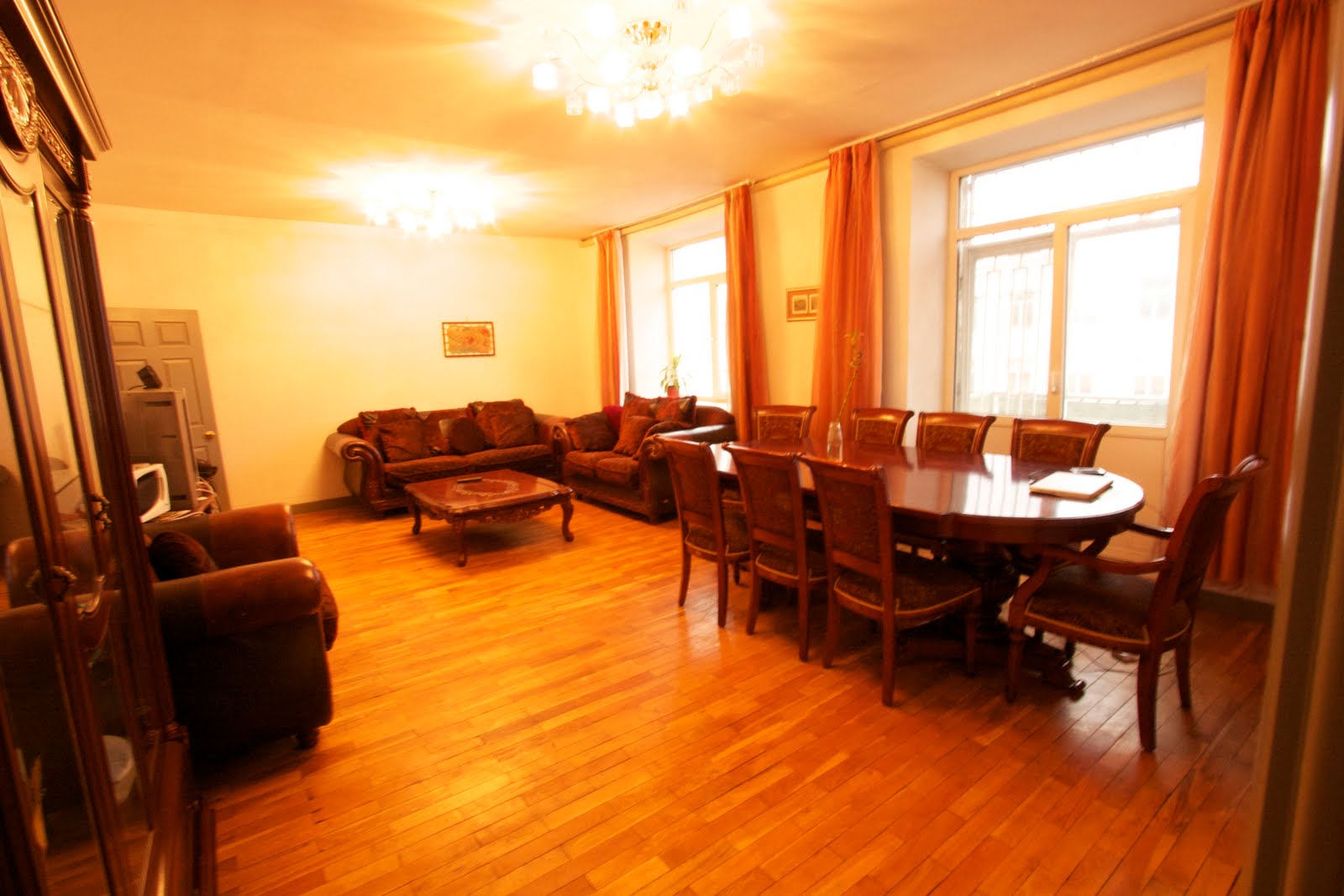
On the positive side we've got a new AYAD replacing the leaving AYAD in our apartment. And before we say goodbye a group of 4 of us are heading out, including our departing AYAD, to Bayan-Ulgii for a week - this is the Kazakh region in far-western Mongolia. I went here for work and loved it so much I wanted to go back as a tourist. We are going to see kazakh eagle-hunters, hear traditional throat singing, see ancient petroglyphs visit the highest peak in Mongolia and walk up to a glacier - which means we are more than likely going to freeze, spend most of the week without showering, being offered lots of salty milk tea and mutton. Good times!
This week I spent a few hours driving through suburban parts of town I had never been to before - in search of newly built ramps and universal access features (access for all people including those with a disability) such as a paths and curb ramps. We didn't find much, there are only a handful of usable ramps around - a little while ago Mercy Corps had a project that successfully had standards for universal access passed into national legislation. Now the project has been renewed for a phase 2 that will see promotion of the standards to actually be put into practice in new buildings and added to existing civic buildings.
Here are a few pictures from driving around town. It's such a cool place...snow covered mountains in the background, with modern buildings, buddhist temples and gers all mixed in. Hummers drive alongside ancient Russian trucks. Stores for designer clothes are next to stores for coal and wood to burn in gers (yurts).
Possibly the best part of winter is the star suits that babies/toddlers are dressed in.
The C is the equivalent of an L in Australia. My boss at work recently took a leave of absence. She told me that a month of this was spent learning to drive. In soviet times, when she was young, very few people had cars so learning to drive was totally unheard of. Now plenty of people drive without a license or get illegal licenses - but some people are honest. The honest ones, like my boss, spend a month in a car with 3 other learners. They spend the whole day taking turns at driving the group, along with an instructor.
Soviet-style apartments. These guys look identical for blocks on end. No idea how people know which one is there's!
Wood and coal for sale for the fires that keep gers warm.
Thursday, October 13, 2011
Zuun Mood Felt Cooperative
The cooperative has seven members including two with disabilities. With the grant they received from Mongol Derby funding they put in a ramp to their workshop as well as getting heating in their workshop and getting some equipment and raw materials.
While there I learned that they provide items to a well known souvenir shop - the only fair-trade place in town, run by a Christian group, called Mary and Martha.
Home
Wednesday, October 12, 2011
National Geographic Story on Mongolia
The Urban Clan of Genghis Khan
An influx of nomads has turned the Mongolian capital upside down.
Click here to read: http://ngm.nationalgeographic.com/2011/10/ulaanbaatar/belt-text
It is a similar story for former-herders in rural areas who have moved to regional centres as well (towns of 15,000-25,000). Without skills they struggle to find jobs but but their children get access to education, without having to live in an unsanitary dormitory away from home, and they still have the family ger to live in.
Also very true that many look on communist days with nostalgia. Thanks to a high level of planning, back then there was no traffic or pollution or ger districts in UB (barely anyone could afford cars, the population was strictly controlled, everyone was given an apartment and a job and there were enough buses to easily get around). Herders were subsidised (not unlike farming in modern-day western countries) so that people had a good quality of life. When the economy transitioned, herders carried on doing what they had been doing but found they didn't make enough money - something the government had known for decades. The logical solution was to get more animals - surely more animals would mean more money.
But it doesn't work that way. More animals cause disaster for the natural environment. More animals for everyone mean that the end product is not worth as much. When natural disaster hits and animals die, it means that the losses are bigger.
This is where groups like Mercy Corps come into the picture - the core goal is to get herders working smarter, not harder. Smarter could mean value-adding to the product: instead of selling the wool straight from the sheep, turn it in to felt, make some products and sell these. Smarter can also mean building up store of food for animals to cope with bad weather.
Or it can mean using technology to plan ahead - the Mercy Corps LEWS project has implemented an advanced computational model based on years of research to predict and monitor weather and fodder conditions so nomadic herders can plan where to take their livestock and prepare for bad weather.
Tuesday, October 11, 2011
The Best and the Worst
This was never more true than on Saturday. The morning saw the most heart breaking thing I have ever had to do, while the afternoon was by far the most beautiful day in UB to date.
The heart break came in the form of a gorgeous little puppy abandoned on the front steps of my work earlier in the week. After a series of events, much deliberation and discussion, and foremost a feeling that I needed to do something for this little pup she ended up back at my place that evening with an understanding that she would be a shared responsibility between me and another housemate.
A few days later and she was being a respectably well-behaved pup, all things considered - of course there were wees and poos, she was only 5 weeks old. But at any rate, it was time for a lesson in cultural differences. Mongolians look at animals differently to Australians, at least. The puppy's other parent decided they were sick of her and no longer wanted her in the apartment. Full stop. Three days in.
So, I was left with a puppy I had fallen in love with (from the second I met her), no longer welcome in my home and with no one else wanting to take her. Her other parent's solution was to set her free on the street. We are coming into winter - it will be -40 degrees outside. Cars do not stop for dogs in UB. A city, especially this one, is no place for a puppy. Our little girl loved chasing buses...which was OK when I had her on a leash. So "setting her free" was not an option for me.
After getting the word out as wide as I could to see if anyone was interested in a puppy, and getting no response, there was only one responsible action left to take. I couldn't have done it alone - I had the excellent counsel of my other housemate (an Aussie) - and despite not wanting to do it, we decided we would have to take her to the vet to be put to sleep.
She had a great few days being spoilt rotten - better treatment than she would have received in a lifetime with a typical local family (I am sure there are exceptions). We couldn't bear to think she was being abused by new owners, or abandoned again when the novelty wore off, or freezing to death in winter, or painfully run over by a reckless driver....
So that was the "worst" of times.
On the other hand, and a million miles away emotionally, was the best of times that was Car Free Day in UB. The CBD - including the streets around my apartment, were blocked off to cars.. Despite being autumn, and the almanac telling me that the average maximum for this time of year is a mere 4 degrees, outside was a gorgeous 14! Everyone, it seemed, was out on the street with their families - walking on the roads, riding bikes, running, SMILING, saying hello... the joy and happiness was infectious. It was amazing.
The biggest intersection in town has a circus like pedestal in the middle where the police man stands to direct traffic. With no cars, children - and Aussie volunteers - could jump up and take some fun photos.
My friend pretending to be a traffic policeman.
People were drawing on the street with chalk - this is just outside my work, usually it is a parking lot from 8am-8pm 7 days a week.
Chess outside the hospital that is on the immediate left of my office.
Even after the cars were allowed back, that night walking down the street a car even stopped to let us cross the street - and the driver was smiling at us. Usually drivers attempt to run over pedestrians, or at least intimidate. Just amazing.
At work on Monday I was very impressed with people's attitude. Being Saturday, most people had things planned - some had very important meetings/appointments etc to get to. With the main streets blocked off the traffic was just horrendous. One colleague waited for 45 minutes for a taxi to get to somewhere important, then gave up - and went out to enjoy the peaceful streets with her family instead. I reckon in Australia she would've been whinging about how the way the event was organised meant she missed out on this important engagement. But instead, she just mentioned that that was how she came to be enjoying the day with her family. That's an example of the more laid back attitude that can make doing things in Mongolia so enjoyable (sometimes, at other times very frustrating).
Ah yes, the Project
You can see the booklet here:
Social Safety Nets project Your Success is Our Success Booklet
It has a success story from each of the 10 aimags (provinces) along with an outline of the components in general and specifcally for each aimag.
The final session of the conference was set aside for the program officers from each aimag, the managers from each aimag, and the UB project staff to share their experiences. The project has had a deep impact on all who have been involved, and as a result the session was very emotional and many tears were shed.
It's been amazing from my perspective to see the impact a project can have - both looking at the big picture with statistics and project outcomes, but even more so hearing the stories of so many project participants whose lives have been changed by their participation.
You can also see a video put together to show the project results:


